Monday, November 30, 2009

Central African Republic - Peanut Butter


I’m learning that Africa likes peanuts. It's in many of their recipes. When I was trying to decide what to cook for our Central African Republic meal it seemed like I had a choice between recipes with peanut butter or recipes with peanut butter. I could have made fuloni boullie, a porridge cooked in peanut butter, or kanda ti nyma, beef meatballs cooked in peanut butter, or spinach stew flavored with peanut butter, or vegetable leaves and yams cooked in a sauce thickened with peanut butter. I decided to go with a beef and mushroom dish cooked with – you guessed it – peanut butter.

I’ve never been a big fan of peanut butter. When I was a kid peanut butter and jelly sandwiches were the staple for kids lunches and I hated it. I would say, give me mussels, artichokes, hummus or moussaka but don’t give me peanut butter! I think it’s because my mother used to use peanut butter to get gum out of my hair and I have never quite gotten over the association. Still, as much as I hated peanut butter sandwiches I would eat things that had peanut butter in them – like cookies and ice cream. Now I eat peanut butter in my stews and chicken and beef dinners.


Central African Republic is a landlocked country in Western, central Africa boarding Chad, Cameroon, Sudan, Democratic Republic of Congo and Republic of Congo. Formally a French colony, it achieved independence in 1960. The years since have been turbulent but it is now under democratic rule and with a new constitution. However, it is one of the poorest and least developed countries in Africa and still relies on France for financial aid. The country has little industry but it does export coffee beans, cotton, and tropical hardwoods. They also have diamonds and gold which remain virtually untouched.


When my dad was assigned to the embassy in Lagos in 1976 he was in charge of the embassy security for five African countries - Chad, Cameroon, Central African Republic, Niger and, of course, Nigeria. He was often away on business at one of these countries but he would come home bearing gifts like: carved wooden animals, necklaces, embroidered table cloths and once brought home a lion’s tooth set in silver filigree for my mother.

In Bangui, Central African Republic’s capital and largest city, my dad sometimes stayed with the Administration Officer from the U.S. Embassy and they would breakfast on his verandah looking down over the jungle and the river while wild monkeys climbed around the vines over their heads. The country is noted for its amazing wildlife.

When my dad went to Baugui it would usually be a two-week trip, not because he had two weeks worth of work, but because once you flew into a place like Bangui, if you couldn’t complete your job in 9 hours, you would have to wait a week to fly out again. As they say in those French speaking countries, "C’est Afrique.” That’s Africa.

Beef and Mushroom in Peanut Sauce

1/4 cup palm oil (or peanut oil)
1 lb beef steak, sliced
3 tomatoes, sliced
3/4 cup peanut butter
8 ounces sliced mushrooms
1 onion, chopped
3 garlic cloves, minced
ground ginger to taste
salt and cayenne pepper to taste

Add the oil to a pot, heat and then cook the onion and garlic until soft but not colored. Add the meat and brown before adding the mushrooms, tomatoes, ginger and 2 cups of water. Cook on low heat for about an hour then remove 1 cup of the cooking broth and use this to dilute the peanut butter to a paste.

Add the peanut butter to the meat mixture and cook for another 20 minutes until the sauce begins to thicken. Serve on rice.

Monday, November 23, 2009

Cayman Islands - Conch (pronounced "konk")


I believe in signs. But most of the time we need to be hit over the head until we notice them. It’s like in the Jim Carrey movie Bruce Almighty when Bruce Nolan, a television reporter who is down on his luck, thinks God is ignoring him. One night, he’s very angry and he’s driving his car down a dark road and he’s talking to God and asking him for a sign – any sign. In the meantime, we see Bruce passing road signs that warn him of danger ahead but, of course, Bruce is so wrapped up in blaming God for all his problems that he doesn’t see the signs and crashes.

Sometimes, with all the choices out there, I need direction on what to cook for any particular country that I’m working on. I need a sign.

On Sunday morning I woke up and lazily grabbed the book I was reading called The Bizarre Truth by Andrew Zimmern. Zimmern has his own show on the travel channel and he travels around the world and eats, well, bizarre foods. This guy eats everything from giant fruit bats to cheese covered in maggots. Yet there are times when he eats things that are quite tasty.

I was reading the chapter where Zimmern was describing catching conch off the coast of Trinidad and Tobago. After collecting a bunch, he and others, took the mollusks back to shore where they ate a delicious conch meal on the beach.

I then got out of bed, got dressed and went to my computer where I googled my next country to cook, the Cayman Islands. The first thing I read about the Cayman Islands is that it’s the homeland of the conch. Interesting. However, it was a Sunday and the seafood market I go to was closed, and besides, I read somewhere that one shouldn’t buy seafood on Sundays and Mondays because it's not fresh. So I tossed the conch idea aside.

Later, Julia and I decided to go an Asian grocery store, called T&T, which I had been dying to check out. I envisioned a little Asia-mart but this place was an Asian superstore. It had everything from Peking duck to durian. Best of all, it had fresh seafood, and not the kind you see at your local grocery store. It had large fresh crab, eel, many different kinds of fish and they had conch. Not only did they have fresh conch but it was on sale, it was the manager’s special.

If this isn’t a sign I don’t know what is.

I grabbed a basket and tongs and helped myself to the conch. That’s what you do in this Asian supermarket: you fish out what you want from the tanks and then put your find in a basket to be weighed. The woman who weighs threw my conch in a bag and handed them to me. I handed them back. I knew from reading Zimmern’s book, just that morning, that extracting the conch from its shell can be hard laborious work. He recommended that you don’t simply boil the conch to get them out because it might ruin the taste of the meat. I know the idea of me trying to get the little buggers out of their shells would have made a hilarious story but I was going to play it smart this time and have someone else do it.

I tried to explain all this to the Chinese woman who spoke no English. She looked at me with incredulous impatience as I began miming in front of her and Julia hid behind the tank of giant clams. The woman grunted, grabbed the bag and walked away. I then heard very loud banging and she came back with just the conch and no shells.

At home I found a conch chowder recipe from the Cayman Islands. To make the chowder was quite simple but when Kevin asked if there was anything he could do to help I handed him the conch and told him I needed him to chop them up.

“Are they alive?” he asked.

I shrugged. “They were when I bought them.”

I placed the conch on the cutting board and the two of us inspected the species that looked like a cross between slugs and scallops. I pointed out the conch penises, which are rather large compared to their body sizes. Kevin made a face and diligently cut that part off.

“That’s good meat,” I protested since these suckers weren’t very big to begin with.

“No way,” Kevin retorted. “We’re not eating that!”

When I cooked the chowder which consisted of leeks, carrots, onion, potatoes, garlic and cream I should have thrown in the penises along with the other meat – like they would have known. Maybe next time. I’d like to brag that I’ve eaten conch penis, however pornographic that may sound. Zimmern did. But then again, he’s eaten maggots…

The conch chowder was delicious - one of my favorites. I wouldn’t mind going to the Cayman Islands, in the Western Caribbean Sea and the location of the world famous seven-mile beach, to eat it fresh. I bet it would taste much better.

I wonder if I should go there. I’ll look for the signs.

Conch Chowder

1 lb chopped conch
1/2 leek, finely chopped
1 carrot, finely diced
1 onion, finely chopped
2 potatoes, cut into small cubes
5 cloves garlic, minced
1 cup heavy cream
2 cups fish stock (I used chicken stock )
2 cups water
1/2 cup dry white wine
1 TBSP butter
1/2 tsp corn starch dissolved in a little water
Marjoram
Cumin seed
1 bay leaf
Nutmeg
Salt and pepper
A few drops of Tabasco

Heat the butter in a skillet, sauté the leeks, carrots, onions and garlic for two minutes. Then add wine, cream, water and fish stock. Then add the potatoes, conch and seasonings. Simmer until potatoes are cooked.

Saturday, November 21, 2009

Cape Verde - music and volcanoes


If you’re looking for a unique, less-touristy destination that hasn’t been fully exploited you may want to consider Cape Verde. The island country, composed of ten islands and eight islets, is located in the Atlantic Ocean off the West Coast of Africa. Despite its proximity to the mainland it has its own distinct culture with Portuguese-speaking, hip swaying music lovers who dance to tunes ranging from the samba to the salsa. The island’s famous singer, Cesaria Evoria – the “barefooted diva” – sings morna, a type of folk music similar to Portuguese fado.

Cape Verde has a wide variety of landscapes ranging from white-sand beaches to volcanic mountain ranges. Here, you’ll experience beautiful scenery, friendly people and a handful of island-y things to do such as hiking, water skiing, snorkeling, fishing and scuba diving. Each of Cape Verde’s islands offer something unique and I imagine it would be fun to island hop. For instance, you could go to Fogo and check out the volcano that erupted in 1995 or you could go to Santiago, the first island settled in Cape Verde and where the capital Praia is located.

The islands were uninhabited until the Portuguese discovered and colonized them in the 15th century. In the 16th century it prospered from the transatlantic slave trade and later it became an ideal location for re-supplying ships. In 1975 it gained independence from Portugal but the country has struggled with isolation and cyclical drought insulting in famine. It now has a fairly stable political and economic system and in 2007, Cape Verde went from being classified as Least Developed Country to being promoted to Developing Country.

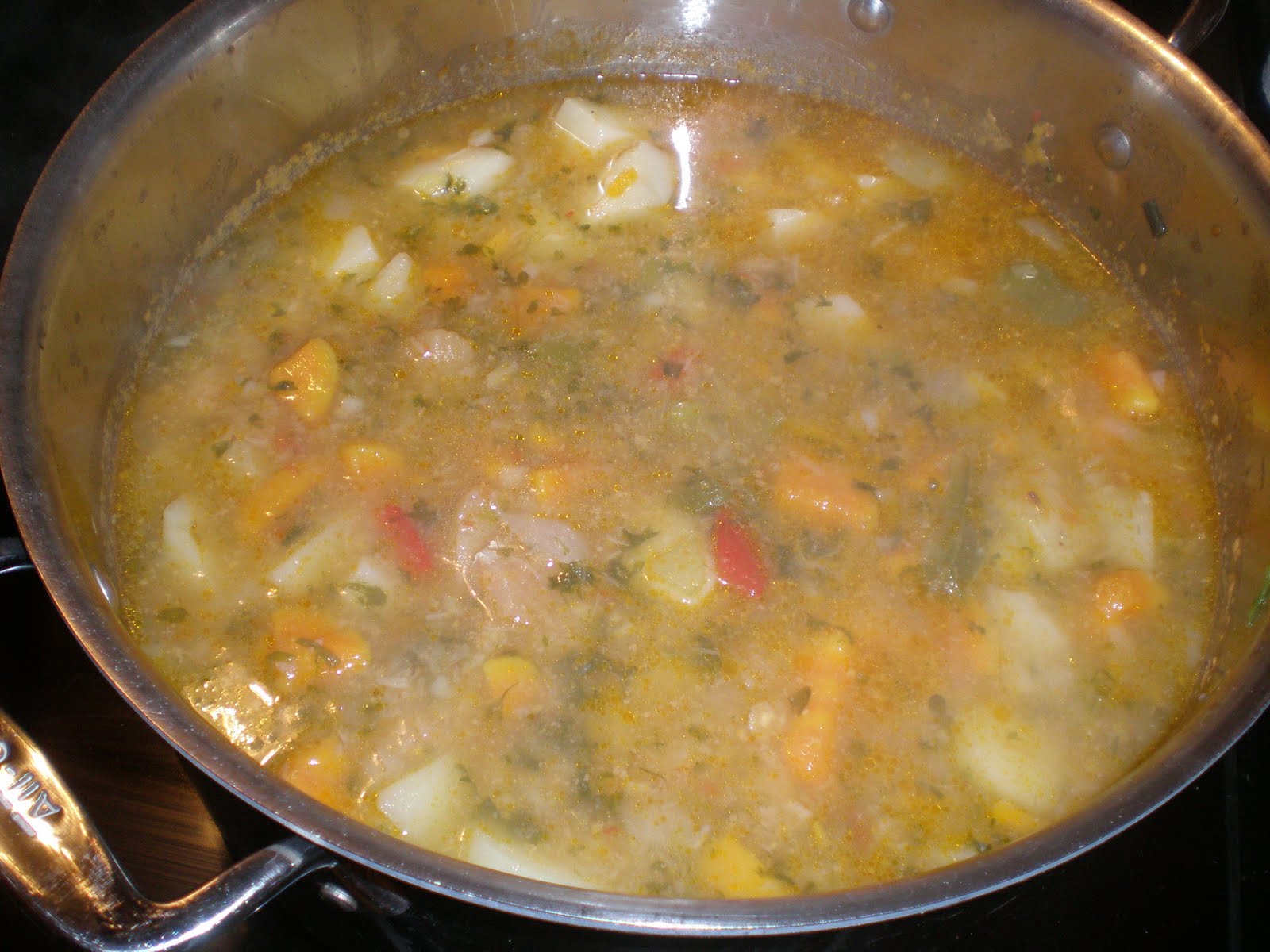
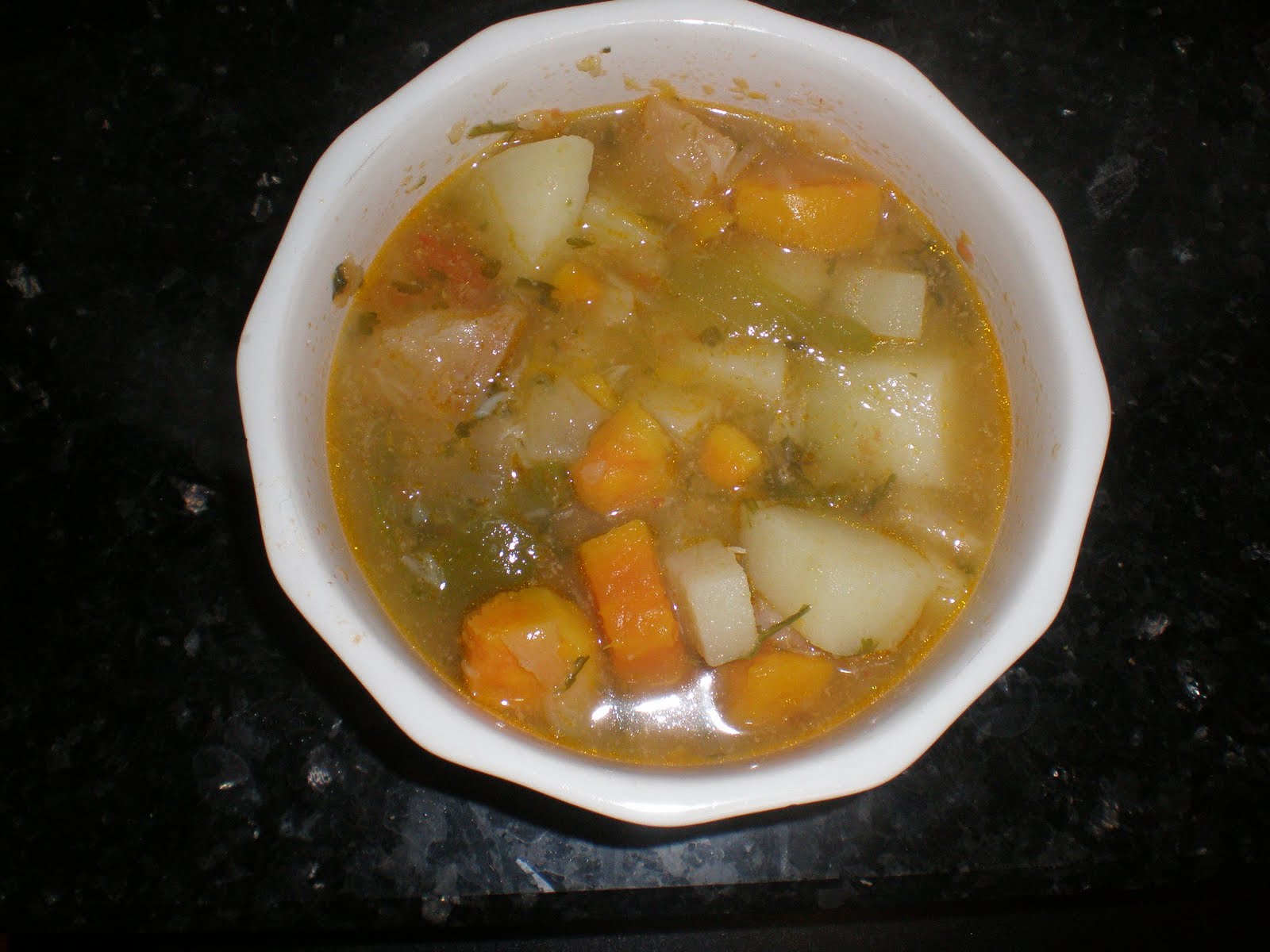
Cape Verdean cuisine is a mixture of African and Portuguese traditions with Brazilian influences. Fish is very popular. Meat, fresh vegetables and fruit are also a part of the cuisine. Many of the dishes include potatoes and rice and a variety of beans. The national dish is Cachupa, a stew made with beans, corn, potatoes and fish or chicken. For our Cape Verdean meal we had Calco de Peixe, a fish soup featuring white and sweet potatoes and various vegetables. It was very good, despite the fact it had no spices. I also made Pudim de Queijo, a cheese pudding made from eggs and goat cheese. It looked beautiful but none of us cared for it.

Cape Verde has been added to my bucket list (I’m creating quite a long list with this project). I doubt I’ll get to go in the next year, or two, or three and I hope that when I do finally get there it’s not over-run by tourists. Then again, tourism will help this country – Europeans do vacation there. So what are you waiting for? Go now.

Caldo de Peixe

6 white potatoes, peeled and cubed
3 sweet potatoes, peeled and cubed
1 bunch fresh parsley
1 red bell pepper
1 green bell pepper
3 medium onions
2 tomatoes
4 green onions
1.5kg fresh saltwater fish (though I used 4 tilapia fillets and cut them up in cubes)
oil for frying

Gently fry the onions, tomatoes, green onions and peppers in oil. Cut the fish into small pieces and fry for a few minutes cover with water and bring to a boil. Add the potatoes and parsley then cover and reduce to a simmer. Cook until the potatoes are soft.

Pudim de Queijo

450g soft goat cheese
450g sugar
2 cups water
12 egg yolks
4 egg whites

Boil the sugar in water until it forms a thick syrup. Add the cheese and mix thoroughly (it may be easier to add the cheese in small parts instead of all at once). Now remove the mixture from the heat and combine with the beaten egg and yolks and egg whites.

Sprinkle the bottom of an over-proof dish with burnt sugar. Pour the cheese mixture into a double broiler and stir until custard thickens. Then pour into the over-proof dish. Bake at 350 degrees for 20 minutes, or until top browns. Allow to cool. Cut into slices and serve topped with granulated sugar.

Thursday, November 19, 2009

Canada - French Canadian Tourtiere


I surveyed my Canadian friends on what I should cook for my Canadian meal. I know I live in Canada but it’s not particularly obvious what Canadian food is. Julia says it’s maple syrup. True. I could have made pancakes and doused them in syrup and called it a meal. And, of course there are other things that are uniquely Canadian. There’s Kraft dinner, Cow’s ice cream, ketchup and dill pickle potato chips, Coffee Crisp chocolate bars and double double coffee from Tim Horton’s. All these things are a part of the Canadian culture but they don’t exactly add up to a well-balanced meal.

But what do Canadian’s think Canadian food is? In my own small survey the number one recommendation was the French Canadian Tourtiere, or pork pie. Others recommended poutine - fries with curds and gravy, fiddlehead greens, wild rice, and beaver tail - deep fried pastry coated in sugar and cinnamon. Some even suggested seal meat, though I have yet to come across seal meat at any of the grocery stores here. My neighbor suggested that I make maple syrup glazed ham and accompany it with mashed potatoes – grown here in Ontario, of course. Perfect.

Canada night was a real winner in my family. After weeks of African couscous, coconut curries, bulgur wheat and strange sounding fish dishes we were going to feast on ham and mashed potatoes, brussel sprouts and meat pies! (I found small individual size tourtieres at a bakery near my house). No seal meat for this crowd. In our minds we were finally eating something normal.

I don’t know if I have said it before but I’ll say it here: I love Canada. I am very content living in Ontario. It suites me. I love the friendly people, the diversity, the fantastic restaurants, theaters, museums, the lakeside towns, the French and British influences, how people say “mum”, how they pronounce “again,” and how they end their sentences in “eh?” I even love the progressive way they think, and, yes, I love their health care system.

Let’s think about this: Thousands of Americans die each year because they don’t have health insurance. I would feel better knowing that a single, struggling mother does not have to make a choice between taking her sick kid to the doctor or paying the electric bill. And why, in God’s name, do we want to fight the insurance companies while we’re fighting for our lives if we happen to get some terrible disease? You can say what you want about the Canadian health care system – long waits to see specialists for instance – but no Canadian is going to go bankrupt because they got cancer.

And while I’m on a rampage I’ll get this off my chest: Americans need to pay more attention to their northern neighbor. It’s embarrassing how little Americans know about Canada. I confess, I didn’t know much about this country before I came to live here too.

Here are some basic facts about Canada that everyone should know:


* The Prime Minister is Stephen Harper
* The capital is Ottawa (not Toronto)
* There are two official languages : English and French
* Canada has ten provinces and three territories
* Their national sport is hockey
* Canada is the second largest country


I’m simplifying things with this list. There’s so much more to Canada. If you haven’t been here I highly recommend you visit. One of the most amazing things we did here was go to Quebec City, the capital of Quebec Province. It’s the ideal place to go if you want to go to Europe without going to Europe. When you get there you won’t believe you’re in North America. The old city sits on the Saint Lawrence River, its skyline dominated by the Chateau Frantenac Hotel. Kevin, the kids and I enjoyed strolling down the winding cobblestone streets lined with shops, restaurants and old stone buildings and all the while listening in on French conversations.

Canada will always have a special place in my heart, even long after we have moved away. It’s not perfect – I mean, come on, the weather sucks and things are frustratingly expensive compared to U.S. prices – but I wouldn’t grumble if I had to live here forever. The snow and the expense is a small price to pay when you consider all the amazing benefits; here in the land of the maple trees, a friendly and peaceful nation, that quietly lives.


Maple Glaze Ham

2 cups apple sauce
1/2 cup maple syrup
1/4 cup butter
1 tsp grated orange peel

Combine ingredients in saucepan and heat to melt butter. Stir to blend all ingredients and then use to glaze ham the last hour of baking.

Monday, November 16, 2009

Camaroon - Safou a la Sauce Tomate


My dad was visiting when I made the Cameroon dish called Safou a la Sauce Tomate. Translation: prunes in tomato sauce. I love having visitors but having out of-town guests is exhausting. It’s not because my guests are demanding but because I knock myself out trying to make their stay enjoyable and memorable. With my ethnic meals I definitely make it memorable. The other reason why I was exhausted was because that morning we all watched John play football. His team had made it to the play-offs. Unfortunately his team lost and to help ease the pain of losing the championship I took John, Julia and my dad to an all-you-can-eat Thai and Japanese restaurant.

The four of us went hog wild eating everything from sushi to Thai basil shrimp. When we were done we practically had to roll ourselves out of the restaurant and we went home groaning that our stomachs hurt. Several hours later it was dinnertime – or should I say time for some Safou a la Sauce Tomate.

As luck would have it, in searching for Cameroon recipes, I found the world’s easiest dish to whip up and who gave a hoot if none of us liked it. We were still stuffed from lunch. Basically the recipe consists of three main ingredients – prunes, tomato sauce and rice. So if you’re pressed for time and you’re cupboards are bare but you happen to have prunes, a can of tomato sauce and rice on hand you can make a meal! Who knew?

I fried the prunes in peanut oil and then added a can of tomato sauce and a dash of paprika and then threw the mixture on a bed of rice. It tasted just as one would think: like tomato sauce with chewy lumps.

“Dinner looks good!” my dad said. He must have been joking. Then again, he did take a couple of helpings.

While we ate our Safou a la Sauce Tomate dad told us a funny story about when he was in Cameroon back in 1975 and he had the scariest airplane ride of his life, which is saying a lot for a guy who has been to 65 countries.

From Lagos, where we lived at the time, he was on is way to Central African Republic. To get there he had to fly into Cameroon, spend the night, and catch a flight the next day to his destination. He was traveling on Cameroon Airlines and there was only one flight a week to Central African Republic. Cameroon Airlines did not assign seats so when the airline employees gave the signal the passengers would have to make a mad dash to the airplane. Since the airline, seemingly, did not keep track of the number of seats they sold there was a good chance that one could get to the airplane and discover that there were no more seats left and you’d be plain out of luck.

As my dad made a run for the plane - with the other passengers - he was pleasantly surprised to discover that the plane was a brand shinning new 757. But, just as he was scrambling up the plane’s stairs, he was stopped by an airline steward who informed him that there were no more seats left on the plane.

“But I have a ticket!” my dad protested.

“No problem,” the airline steward assured him, “you can go on that plane.” He pointed across the runway to a dilapidated 1940 DC 6 that was most likely flown during World War Two - and looked like it had been in a few battles.

My dad quickly had to make a decision: Should he stay in Cameroon for a week to wait for the next plane or should he fly on this African operated1940s DC 6?

He decided to chance it and hopped on the DC 6. It doesn’t say much for Cameroon that my dad would rather risk his life than stay one week in that country. But that’s what he did and he was thinking the whole time he was doing the stupidest thing he’s ever done.

He fastened his seatbelt tight as they cranked the plane up, black smoke spewing up from the engines. The plane took off but it couldn’t go very high since the plane was not pressurized. As they bumped along my dad looked out the window to discover a thunderstorm brewing in the sky. Lightening lit up around them and my dad held on tight. With each lightening bolt he could see the dense and ominous jungle below.

Needless to say, my dad made it to Central African Republic alive. But his flight there will never be forgotten, and his story of Cameroon was the perfect accompaniment with Safou a la Sauce Tomate.


Safou a la Sauce Tomate (prunes in tomato sauce)

12 prunes
2 cups tomato sauce
2 TBSP peanut oil
1 tsp paprika

Rinse prunes, halve them and remove pits. Add to saucepan along with 1 cup of water and simmer until soft (about 4 minutes) then drain.

Heat oil in a frying pan over medium heat. Add the prunes then fry for 2 minutes before adding the tomato sauce. Cook over medium heat for 5 minutes then add 1 tsp paprika, if desired. Serve on rice.

Saturday, November 14, 2009

Cambodia - The Killing Fields


The Killing Fields was one of my mother’s favorite movies. Every Christmas Eve we would gather the family together and my mother would insist we watch this movie. I don’t know what started this tradition but I can’t watch The Killing Fields now without thinking of my mother and Christmas.

The Killing Fields is a heart wrenching and dramatic true story about friendship and the horrors of war. I think my mother loved the movie because she secretly envied the job of Sydney Schanberg, a New York Times reporter who uncovered the secret US bombing campaign in Cambodia. What drives this movie is the friendship between Schanberg and his Cambodian assistant, Dith Pran. The two men are separated when Pran is forced to remain in Cambodia while Schanberg and other Westerners evacuate the country during the fall of Phnom Penh in 1975.

Trapped in Cambodia, Pran is captured by the communist Khmer Rouge and is forced to endure the atrocities of the Pol Pot regime during what is known as “Year Zero” that killed 3 million Cambodians. He struggles to stay alive and escapes a labor camp and walks through the “killing fields,” the skeletal remains and dead bodies of the brutal massacres, to his freedom in Thailand.

The film ends with the reunion of Schanberg and Pran with the John Lennon’s song Imagine playing in the background. I have watched this movie many times and I always cry at the end over the sheer joy that these two friends have found each other again. Just writing about this scene makes me tear up!

Cambodia is in South East Asia and borders with Vietnam, Laos and Thailand. The cuisine is similar to Thai but not as spicy, and Vietnamese. It also has Chinese, Indian and French influences, a culinary blend that is unique, delicious and healthy. The dishes include many fresh fruits and vegetables, as well as fish and rice.

For our Cambodian meal I cooked a coconut fish curry called Amok Trei. The fish is cooked in thick coconut milk, wrapped in banana leaves and steamed. I found the banana leaves at a local Latin grocery store that I frequent and where I have become a familiar face. I often run into the owner at Starbucks and we exchanges pleasantries.

The curry dish was not difficult, other than trying to make parcels out of banana leaves for the fish to steam in. One needs to be a master at origami to actually get the dang things to fold and tuck neatly. But I did my best and threw the parcels into the pot to be steamed. When I was done I served the fish over rice. It made for a delicious and interesting meal. The banana leaves had a distinct smell and I was certain that the point of steaming the fish in the leaves was to flavor the fish. However, the coconut was so overpowering that we did not taste the banana leaves.

Upon doing my research on Cambodian cuisine I discovered that the Khmer people (Cambodians prefer to be called Khmer) love to eat spiders – palm sized tarantulas to be exact. They are deep fried and served piping hot. They’re good for virility, apparently. This delicacy was discovered during the Khmer Rouge years when many Cambodians were starving and found sustenance in eating bugs, including tarantulas.

After our Cambodian meal I couldn’t stop thinking about the movie The Killing Fields. I wondered if I should dig it out of my collection of DVDs and watch it again.

I could hear the words to Imagine in my mind:


Imagine there's no countries,
It isn't hard to do,
Nothing to kill or die for,
No religion too,
Imagine all the people
living life in peace...


No, I decided I’d wait to watch the movie. It brings up too many memories of my mother and our travels through East Asia. Perhaps we’ll watch it on Christmas Eve.

Amok Trei (Coconut Fish Curry)

1 garlic clove, chopped
1 red onion, chopped
2 inches root galangal or 1/2 tsp ground galangal
2 TBSP chopped lemon grass or 2 tsp ground lemon grass
1/2 tsp ground turmeric
1 tsp paprika
2 TBSP fish sauce
1 TBSP sugar
1/2 tsp salt
14 oz. Can coconut milk
1 lb white fish
Package of banana leaves

Place the garlic, onion, galangal, lemon grass, turmeric, paprika, fish sauce and sugar in a blender and process until well blended. Add the coconut milk and process again. Transfer the coconut mixture to a medium saucepan and bring to a simmer, stirring. Continue to cook gently for 10 minutes until thickened. Meanwhile, cut banana leaves into 8 inch squares. Place fish in bowl, season with salt then pour on half the coconut mixture and mix well. Set remaining sauce aside. Place some of the fish in the center of each leaf and fold edges over to form secure parcels, and make sure you tuck the edges under. Steam the parcels for 1 hour. 5 minutes before the hour ends, reheat remaining sauce. To serve, make a small opening down the center of each parcel and spoon the remaining coconut sauce in the opening. Serve with rice.

Thursday, November 12, 2009

Burundi - the best date and banana cake


Burundi is a small East African country neighboring Tanzania, the Democratic Republic of the Congo and Rwanda. Intertribal tensions between the Hutus and Tutsis have devastated the country since it gained independence from Belgium in 1962. It’s a shame. It’s described as a beautiful country with gorgeous mountains and the finest inland beaches on the continent. The capital, Bujumbura, sits on the shores of Lake Tanganyika, the world’s oldest, longest and the second-deepest fresh water lake

For the Burundi meal I prepared Boko Boko Harees, a chicken and bulgur wheat dish served with fried onions and a chicken giblet/turmeric mixture. We also had a beans and bananas dish and a date and banana cake.

In the Boko Boko Harees recipe it said I needed whole or bulgur wheat. What did I get at the grocery store? I got whole wheat flour. When I got home I read in the recipe that I had to soak it for three hours. So what did I do? I put the whole wheat flour in a bowl and covered it with water. The recipe said that I had to drain it and I wondered how in the world I was going to drain dough! I wasn’t feeling well and my dad was flying in to visit us from Washington D.C. the next day and I had no patience for this. I then reread the directions and I finally saw bulgur wheat. There was no mention of flour! I felt like Amelia Bedelia in the kitchen, only she would have done a better job because she follows exact directions and I can’t read, apparently. Thank goodness I didn’t try and cook my chicken in that whole wheat flour crap. But there went dinner. It was already 7:30, I now needed to go to the grocery store, get bulgur and soak it for three hours! I was just going to have to cook the Boko Boko dinner the next night when my father was here. It’s not like I haven’t warned people about dinners at my house.

But there was still the cake. I, somehow, finagled Kevin into making the Burundi dessert. He’s much better at baking than I am. I attribute this to the fact that he’s an engineer. He’s very good with directions. I’m not. He’s precise. I’m not. He does what he’s told. I rebel. I’d rather throw some of this and some of that into a pot. The hell with exact measurements! So Kevin very diligently made the dessert (with Julia’s help). Wouldn’t you know, it came out beautifully. It couldn’t have tasted or looked more perfect if we had bought it at a bakery.

One of Julia’s best friends was over. He’s the sweetest little boy in the world, but the pickiest eater. I once had him over for dinner and I served lasagna and he wouldn’t eat that! But we gave him a piece of Kevin’s African cake and he loved it.

“Wow! This is delicious!” I heard him say while I poured my whole wheat flour slop into the trash. It was cake for dinner and my dad was just going to have to put up with eating Boko Boko Harees the next night.

I suppose there’s something to be said for following directions.

The next night, my dad was a good sport. When we sat down at the table and I placed Boko Boko Harees in front of him he exclaimed how good everything looked. The dish resembled, and tasted like, oatmeal with chicken in it. For sides, to go along with the Boko Boko, I served chicken hearts and livers fried in a turmeric paste and fried onions cooked in ghee. Ghee is a clarified butter primarily used in Indian cuisine. The beans and bananas were cooked with onion and paprika.

John was being crabby, however. He protested over the meal – the kid who gladly ate mopane worms. I don’t know if he was turning his nose up at the food because my dad was there and he was rebelling for the sake of appearances, because he was in a fowl mood or because he honestly didn’t want to eat this crap anymore!

When I questioned him he said, “Mom, as a kid, I’m not supposed to want to eat chicken hearts and livers!”

Good point. I didn’t press the issue and he eventually slopped the Boko Boko Harees onto his plate and ate it. So sweet. His loyalty to the project won over any sense of what he was supposed to like as a kid.

Boko Boko Harees (Chicken with Bulgur wheat)

600g bulgur wheat
3 chicken breasts
3 sets of chicken giblets
1 large onion, grated
1 small onion, sliced
3 TBSP turmeric paste
5 TBSP sugar
6 tsp ghee
2 tsp salt

Place the wheat in water and allow to soak for 3 hours. Drain the wheat, then place in a large pot along with chicken and grated onion. Add enough water to cover the mixture by 3 cm. Add half the salt, bring to a boil and reduce to a simmer.

Meanwhile, make a turmeric sauce. Cut the chicken giblets into small pieces and simmer with the turmeric paste and 1/2 cup water. Add a pinch of salt and 3 TBSP sugar to the mix. Cook gently for 10 minutes then allow to cool.

Once the wheat is cooked and softened about 30 minutes), remove the chicken breasts and shred finely. Add the chicken back to the wheat and stir to combine. Add 3 tsp ghee and continue stirring until it’s well mixed in.

The wheat paste should be the consistency of a thick dough. If it is too runny cook further to thicken sauce.

Now fry the remaining onion in the remaining ghee. Cook until the onion turns crispy.

Serve in a bowl accompanied by the fried onion and turmeric mixture in separate bowls.


Beans and Bananas

500 ml dried kidney beans
4 green bananas or plantains
2 TBSP palm oil
1 small onion, thinly sliced
1/4 tsp salt
Paprika to taste

Soak beans at least 3 hours in plenty of water. Drain, place in a pan, cover with water and boil for 40 minutes, or until tender. Drain. Peel and chop bananas then add the oil to the pan and brown the onions. Add the beans and bananas to the oil, season with salt and pepper then stir-fry for 2 minutes. Add 1 cup water and simmer until the beans are completely cooked and the liquid has reduced. Serve hot.


Date and Banana Cake

2 sticks butter
3/4 cup sugar
2 eggs
2 cups flour
1 pinch of salt
2 tsp baking powder
4 bananas
250g dates, chopped
15 ml melted butter
1 tsp cinnamon
2 TBSP sugar

cream together butter and sugar until light and fluffy. Beat eggs into this mixture on at a time then add the flour, salt and baking powder. Mix well and place half the mixture into a well-greased 9x9 inch pan. Cover the dough with sliced bananas and chopped dates and top with the remaining dough.

Place in the center of the oven pre-heated to 350 degrees and bake for 30 minutes or until golden brown. Remove from the oven, brush the top with melted butter then mix the sugar and cinnoman and sprinkle over the top. Serve warm.