Sunday, September 13, 2009

Argentina - The Sky Ranch


When most of us hear about Argentina we think of Evita and the famous song “Don’t cry for me Argentina.”

When I was twelve and my mother and I were living in the Philippines - my parents were divorced by that time - my mother was dating a man named Mac. He was the Counsel General at the American Embassy in Manila and my mother was a junior officer. In fact, this was her first overseas assignment as a Foreign Service officer. Mac was much older than my mother, had already been divorced two or three times, palled around with Manila’s millionaires, drove around in a BMW, and he had all the latest gadgets, including a VCR. Since my mom and I only owned a tiny black-and-white television set, being able to watch movies of my choice was really cool. If my mom and Mac wanted me out of the way all they had to do was suggest I watch a movie. My favorite movie, that Mac owned, was the story of Eva Peron.

I remember thinking I wanted to be just like her. Evita had fought for the poor and for women’s right to vote in a national election. She had been poor herself who rose up out of a strong determination to be an actress and married Juan Peron who became the president of Argentina. She was a savior for Argentina’s poor, and when she died of cancer at 33, some compared her to Jesus. But the movie showed she could be cruel and ruthless. I liked that about her because it made her complex and interesting.

When I was twelve, my confidence in myself was waning with each step closer to adolescence. It was good for me to learn about women who would stop at nothing to get what they wanted, to make a mark in the world. Eva Peron’s story made me feel powerful. It made me want to tell all those, who told me what I couldn’t do, to buggar off! She gave me hope, like she gave Argentine’s poor, with a message that it didn’t matter who you were or where you came from, you were still valued.

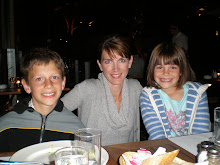
For our project, I had the night off from cooking. We drove 45 minutes North of Toronto to go to one of the few Argentinean restaurants in the area called The Sky Ranch. It was located in a run-down area in a little strip mall. On the outside it looked plain, and if we hadn’t been looking for it we would have missed it. In the inside it had a warm unpretentious ambience that only a local, family-owned restaurant could accomplish. The waitress looked at us curiously. I got the feeling that the place was a “regulars” joint, when someone new came in, it was noticed. It was a hard place to be inconspicuous, especially with my camera and notebook in hand.

The nice thing about eating out for our project, besides not messing up the kitchen, is we can all order something different and in that way try a greater sampling of the cuisine. Most of the food of Argentina has been adapted from other cultures – Spanish, Italian and German foods have all had an influence. But one thing is for sure, Argentineans love their meat and eat it at least once a day. They love to roast their meat on a grill and they mix their meats and cuts, sometimes including udders, intestines, and kidneys. They also love chorizos, empanadas and locro, a corn-based stew.

At The Sky Ranch, we ordered Provoleta a la Porilla (grilled provolone cheese) and several Empanada de Carnes (Argentinean meat pies) for appetizers. For our main course, I choose Cozuela de Marisco (seafood cooked in tomato sauce). They should have just called it seafood soup. It was excellent with a variety of seafood in it including squid, octopus, shrimp (with the shell on. I wasn’t sure how to eat that!), pieces of fish and mussels. Kevin ordered the Lomite Completo (steak on a bun served with ham, cheese, fried egg, lettuce and tomato). Basically, it was a steak sandwich and delish! Julia first ordered the Milanesa de carne (breaded veal cutlet) but it turned out they didn’t have it, so Julia got the Milanesa de pollo (breaded chicken cutlet), which was good, but not a far stretch from chicken strips you’d get on a children’s menu. Lastly, John ordered the Chirrasco Argentino a la Parrilla (grilled Argentean steak). It was flavorful and juicy and came with a large helping of mashed potatoes.

We didn’t get crazy and order intestine, and because of that, we all loved our meals and it was fun watching people as they poured into the restaurant. The table next to us was a large group and they had grills on their table with heaping piles of different meats. In the corner of the restaurant was an area set up for a band. The Sky Ranch has live music on Saturday nights. Kevin asked when the band would start playing. 9:00 he was told. We finished up around 8:30 so we missed the live music. It was too bad, but we promised ourselves we’d be back again – in a year. The restaurant is too far away for us to just drop in, and if we’re going to drive 45 minutes to go to a restaurant it will be for a cuisine still left on my list.

While we waited for our check, Kevin mentioned that Obama’s poll numbers were down. I didn’t like how he said it; he had a little smirk on his face.

“You sound as if you’re happy about that,” I said angrily. Every time Kevin and I talk about politics my blood boils. It’s always a big mistake for us to go there. But once we start it’s very hard to stop. It’s like watching something disgusting on T.V, you want to pull your eyes away from it, but you can’t.

I tried to take in the ambience and forget about my anger. I knew in my heart of hearts Obama would be revered in our history books, and the history books around the world. Just by being elected he has given the world something we haven't had in a long time – hope that no matter who you are or where you come from, you can make your mark, achieve the impossible. He’s not perfect, but he has that ability – like Eva Peron – to touch something inside us.

Friday, September 11, 2009

Antigua and Barbuda - Vacation destination


Okay. I may have said I wanted to live in Andorra (I have a feeling I'm going to find lots of places I want to live), but Antigua and Barbuda is where I want to have a vacation home!

Close your eyes and imagine this: warm white sand, crystal blue water under a blue cloudless sky, palm trees blowing in the wind. If you have the time, look up Antigua and Barbuda on the internet and check out the pictures. Can you imagine the first explorer to discover this one?

Antigua and Barbuda are located in the Eastern Caribbean and Antigua is the largest of the English-speaking Leeward Islands - and large it ain't. It's 14 miles long and 11 miles wide, encompassing 108 square miles with a population of 68,000.

Barbuda, a flat coral island, is only 68 square miles. The nation also includes a tiny uninhabited island called Redonda - now a nature preserve.

Check out this climate: Temperatures range from the mid-seventies in the winter to the mid-eighties in the summer. It is also the sunniest of the Eastern Caribbean Islands and has low humidity year-round. I'm there!

On tonight's menu we had pork chops with banana and bacon and sweet potato mash. Antigua and Barbuda recipes are typically heavy - meats and stews and accompanied by starchy vegetables, which is unexpected. For island life I think light meals, don't you?

Dinner got high marks from all of us, and my kitchen stayed relatively clean. Kevin helped by grilling the pork chops and the banana and bacon skewers. Having a cook-out on a Friday night turned out quite nicely (and I didn't plan it that way).

Julia had a friend stay over for dinner. Warning: If any of you come to dinner at our house in the next year, we WILL be serving some sort of ethnic dish and there is no guarantee that it will be good, and it may be weird. I'm sorry, but if I'm cooking than it's from a country on my list. On the days I don't cook an ethnic dish, I don't cook.

Anyway, Julia's friend lucked out because our meal was good and was not weird. Julia's friend told her mom that my Antigua dinner was yummy.

During dinner I took a survey of what everyone liked the best. The winner was the bananas wrapped in bacon, and coming in second was the sweet potato mash.

Excuse my pictures this time. On both the pork chops and the bacon and banana skewers, I served everyone's food before I realized I forgot to take a picture of it. I tried to put some of the food back on the serving platters, but I just couldn't make it look pretty.

PORK CHOPS WITH BANANA AND BACON

4 pork chops, about 1" thick
3/4 TBSP cumin
salt and pepper
juice of a lemon
2 TBSP softened butter
2 large bananas
6 strips of bacon
Beer (optional)

Combine the butter, salt, pepper and cumin. Rub mixture into both sides of the meat. Saute the bacon briefly, until some of the fat has rendered. Remove and drain. Peel bananas and cut into 1 1/4 " chunks. Place bananas on a dish and sprinkle with lemon juice. Cut the bacon strips into lengths just long enough to wrap around each banana slice. Place bananas on skewers, threading where the bacon slices overlaps. Place the pork chops on a hot grill, for 15 minutes, turning once. Turn grill down to medium, adding the bacon and the bananas; grill another 10 minutes, turning both the meat and the bananas. For extra flavor, baste with beer, while the meat cooks.

SWEET POTATO MASH

1 sweet potato
2 russet potatoes
1/2 cup milk
2 TBSP vegetable oil
1 onion, chopped
2 garlic cloves, chopped
1 pimento pepper, seeded and chopped (I couldn't find a pimento pepper so I used chopped pimento in a jar.)
1/4 cup chopped chives
1/2 cup grated cheese (optional) (I grated a mixture of cheddar and parmesan)

Peel both types of potatoes, boil and mash. Add milk, salt and freshly ground black pepper and combine. Heat the oil in a small frying pan and saute the onion, garlic and pepper for just a minute. Add to the potatoes, and add the chives and cheese. Place in an oven proof dish and sprinkle with cheese. Broil until the cheese is melted and the top is browned. Garnish with chopped chives.

How I'm doing so far


It’s been a busy week. It’s hard adjusting to the lazy days of summer and then jumping back to a school year routine. There’s been lots of running around getting things for school, signing up for activities, and battles at bedtime. John is now in the 6th grade and in french immersion, and Julia loves having a locker! She told me it makes her feel very grown up.

A friend of mine asked me how I’m feeling at this point in the process of eating the cuisines of 195 countries. The truth is, I can see this taking over my life but I am committed and there's no turning back now. I can't believe I'm still in the A's!!! (I still have Antigua, Argentina, Armenia, Australia, Austria and Azerbaijan). I will be SOOO happy to move on to the B's!

What's great is my family is loving it - including Kevin. On Wednesday Kevin had to go out of town and when I told him I was going to do Angola that tonight and he was genuinely disappointed. As it turned out, I decided to do Angola on – Thursday.

There is also great news! My friend from South Africa, who used to live in Botswana, arranged for her friend to send me Mopane worms. They are a popular snack food in Botswana. Isn't that exciting? We'll just have to hope it gets through customs! Also, my friend from Burma is sending me Burmese recipes. Plus, I found a South African grocery store, here in Oakville, that sells ostrich meat! And the seafood Butchery here in town told me - that even though they have never sold conch meat - they'll find some for me if I give them a few days notice. I get so pumped up when friends and relatives tell me how much they like my blog. My friend, who writes my favorite blog "Parenting isn't for sissies," wrote an article on her Chicago Parent blog about my project. Last night another friend and her husband called and gave me great advice on how I can get the word out about my blog.

I am very excited about eating things I’ve never had, but I’ve realized that I don’t know as much as I thought I did about food – and geography. It’s been humbling.

For example, I told you in my Algeria post that I did not know what a rutabaga was. I thought it was this exotic vegetable that could only be found in certain parts of Africa. When it was in my Algerian recipe, I didn’t even bother looking for it at the grocery store. Well, today, I’m at my local grocery store buying things for my Antigua and Barbuda dinner and there, in plain day light, was a big basket of rutabagas! I was so excited that I decided to buy one even though I don’t need one anymore and, to tell you the truth, it didn’t look particularly good to eat either. When I went through the check-out line I was expecting the cashier to ask me what it was (in fact, I was kind of hoping she would) but she didn’t. She didn’t even take a second glance at it and quickly punched in the code without even having to look it up on her cheat sheet! Then I thought; okay, was I the only idiot who didn’t know what a rutabaga was?

For those of you who are as clueless as I am, a rutabaga is a large root vegetable also called a Swedish turnip. Rutabagas are not, as I had thought, some strange African vegetable, but in fact, from Europe. Apparently, they are widely eaten in North America as well. In Canada they are used as a side dish (This is what I have read. I have yet to go to a dinner party here in Canada where they serve rutabaga) and in the U.S. they are added to stews and casseroles.

During World War 1, many Germans were kept alive on a diet consisting of rutabagas. After the war, they were nicknamed “famine food.”

Cool facts about rutabagas:

In the U.K. and Ireland, before pumpkins were readily available, rutabagas were made into jack o’lanterns.

In Scotland, they were the ancient symbol of a damned soul.

I'm not even out of the A's and already my family and I have learned a lot about food and our world.

Thursday, September 10, 2009

Angola - coconut


My husband, Kevin, who is a sports fan, remembers the 1992 summer Olympic games when the U.S. basketball dream team beat Angola 116 to 48. I have to admit, I didn't know anything about Angola - I didn't even remember them at the summer olympics.

Angola - a mostly Christian nation - is on the western side of Southern Africa and twice the size of Texas. Portuguese slave traders established colonies on Angola’s Atlantic coast in the 16th century. The colonist cultivated sugar cane and tobacco for the European market. In 1975 Angola won its independence but continued in a civil war until 2002. The country is in ruins after decades of war and is devastatingly poor and heavily in debt. It has one of the lowest life expectancies and infant mortality rates in the world. Transparency International – an anti-corruption watch dog – rated Angola as one of the 10 most corrupt countries in the world in 2005.

However, the country’s economy has grown and it has established some political stability since 2002. It’s a large petroleum and diamond producer and I read that Angola is China’s biggest supplier of oil. If that’s the case, I can’t imagine they’ll stay poor for long – unless they are so corrupt they don’t use that money to get out of debt, rebuild their country and help their people.

Does anyone know how to open a coconut? In the Angolan dessert I made – Cacada Amarela (yellow coconut pudding) – it called for freshly grated flesh from half a coconut. I’ve eaten lots of fresh coconut but I have never opened one. So I looked it up on the internet. Apparently there are all kinds of ways to do it, but when reading the directions it did not sound too terribly difficult. One site said: Hold the coconut in the palm of your hand and firmly tap the seams that runs between the“eyes” with the blunt edge of a heavy knife. Continue tapping and rotating the coconut in your hand until the coconut splits open. This should happen after a few turns and into equal parts. Yeah. Not quite. I waited until John and Julia got home from school to attempt this. John had a friend over and he looked at me strangely when I excitedly told them we were going to open a coconut today! In the kitchen we got out the coconut and the directions. I tried tapping and rotating while eager eyes watched. Nothing. John tried it. Nothing. I then got out a hammer. Nothing. I got out a hammer and nail. Nothing -not even a dent. John, his friend and Julia took it outside and started beating it on our stone steps. Nothing. We then took turns pounding the nail into it. We managed to create a tiny hole. I finally went in the house frustrated and about to give up while John continued to beat this coconut against the steps like he was murdering the thing. Finally Julia came running into the house. “Mommy. Mommy, we got the coconut open!” What a glorious thing! I ran outside. The coconut was cracked. I got a glass so we could drain the liquid into it. John smashed it a couple more times and FINALLY it really did open! The kids were eager to try the coconut milk which looked and tasted more like bad water. John’s friend stood back and eyed us suspiciously and when we offered him some of this coconut water he politely said, “No thanks.”

The meal was not good. We had Camaro Grelhado Com Mohlo Cru (grilled prawns with raw sauce) – these were tasty but how hard is it to blotch shrimp? I blotched the rest of the meal. We had Arroz de Coco e Papaia ( Rice with coconut and papaya). It wasn’t bad, but I will not being making it again. My version tasted watery and had little flavor. Though it's too bad we didn’t like it because papaya is very good for you and my kids love it. Lastly, I made Cacada Amarela (yellow coconut pudding). I hate to say this, but for all that work to get that darn coconut open, the pudding was horrible. I don’t think it’s the fault of the pudding, although I swear I followed the directions. It just wouldn’t get creamy - it thickened slightly, but it remained soupy. And then the coconut pieces in it were hard little chunks floating around that made it even more unappetizing. I took a few bites and threw the rest out. The kids didn't finish their pudding either.

When Kevin came home he ate his whole bowl of pudding and told me he liked it! “I love coconut” he said. I told him that I will not be cooking anything else involving fresh coconut. It was not only hard opening the thing but then it was a pain to scrape the flesh off! There have got to be special tools for that! My dinner got low marks from the kids but I’m sure that’s no reflection on the cuisine of Angola - just my cooking.

After that great recommendation here are the recipes:

Camaro Grelhado Com Mohlo Cru (grilled prawns with raw sauce)

450g shelled tiger prawns (I used a pound)
2 garlic cloves, crushed
100g finely chopped spring onions
1 tsp ground cumin
1/4 tsp salt
4 TBSP white wine vinegar
4 TBSP water

Place all the ingredients (except prawns) in a pestle and mortor and grind to a paste. Thread the prawns onto skewers then brush with the sauce before cooking on a barbecue until done (about 3 minutes on each side). Brush again with the sauce when turning. Serve with rice.


Arroz de Coco e Papaia (rice with coconut and papaya).

200g rice
1/2 tsp salt
1/2 tsp ground cinnamon
500ml coconut milk (I used one can)
1 papaya, de-seeded, peeled and cut into small dice.

Add rice, 60ml water, salt, cinnamon and coconut in a pan and bring to a boil. Cover, reduce the heat and simmer for 20 minutes, or until the rice is done. Fluff the rice, take off the heat and leave stand, covered, for 10 minutes.

Mash half the papaya then add this mush and the remaining papaya cubes to the rice. Place back on heat and heat mixture. Serve.


Cacada Amarela (yellow coconut pudding)

180g sugar
720 ml water
2 whole cloves
freshly-grated flesh from 1/2 coconut
6 egg yolks
1 tsp ground cinnamon

Combine sugar, water and cloves in a small sauce pan and bring to boil, stirring constantly. When it starts boiling, stop stirring and boil for about 20 minutes. Reduce heat then remove the cloves with a slotted spoon. Add the grated coconut a little at a time, stirring well after each addition. Continue to cook, stirring the mixture very frequently, for a further 10 minutes (the coconut should be translucent). Remove from heat. Add the egg yolks to a bowl and heat until slightly thicken. While whisking, add half the syrup mix to the eggs then pour the egg mixture back into the saucepan. Whisk, then return to heat. Cook misture over medium heat for 10 minutes, stirring. The mixture will thicken. Spoon pudding into 4 serving dishes, garnish with cinnamon.

Monday, September 7, 2009

Andorra - A place to live and eat


I think I might have found the place I want to live. Andorra has the highest life expectancy in the world and it’s famous for shopping. This little country, wedged between France and Spain, with a population of 76,900 has 2000 shops! It’s also known for having the most dramatic scenery in all of the Pyrenees. And, on average, it has 300 days of sunshine a year. The only disadvantage that I can see is that it’s land locked – but then it’s between France and Spain. I mean, how awful could that be! But then I read that the country does have a sea opening – so there you go! I wonder how much real estate is there?

Andorra was under both French and Spanish occupation until World War Two. Andorran cuisine is mostly Catalan with French influences. Lamb and pork are very popular and they love their pasta and vegetables, like potatoes, tomatoes, cabbage and celery, and they also eat fish.

Tomorrow – September 8 – Andorra will celebrate their national day. I would have cooked Andorran cuisine in celebration of this special day, but quite frankly, Tuesdays are a rat race for me with John’s football practice, and it is the kid’s first day of school! I don’t know if they’re happy about it but I certainly am!

Okay, here’s another reason why I want to move to Andorra, I love the food!! The dinner tonight was darn right yummy! We had Carpaccio of Andorran Veal, Catalan Spinach Salad, and Trinxat (cabbage and potato cake). It was a bit of a pain to make but I’d do it again. I think the biggest problem tonight was that I had three things going at once. I was in a frenzy trying to mash potato and cabbage into bacon grease while tying rolled up veal with string, and blanching spinach all at the same time!.

Carpaccio of Andorran Veal is a traditional Andorran recipe of thinly sliced veal filled with mushrooms coated in honey and covered with grated Parmesan cheese. This was not a hard recipe – if I wasn’t mashing and blanching. Only two things gave me pause. For one, it called for finely sliced ceps. I had no idea what ceps were and had to get out the handy dandy dictionary. Ceps are mushrooms. Aka Porcini. I know what porcinis are! Also, the recipe requires basil, and wouldn’t you know, I forgot to get basil at the grocery store yesterday. I couldn’t run out to the store and get it – the grocery stores were closed since it’s Labor Day. Those who live in U.S. cities will have a hard time imagining having days where everything shuts down. Well, it does here! So I had to use dry basil as a subsititute. It was the best I could do.

Trinxat. This is a traditional Andorran recipe of fried potato and cabbage cake served with bacon. This took some time, and linguistically it was complicated. I had to boil the potatoes and cabbage, then mash them, then cook the bacon, then take half (and I had a crap load) of the potato mixture and add it to the bacon grease and flatten it like a pancake. Now here’s the good part: when the one side was brown I had to flip this huge pile of mush onto a plate and then flip it back again into the pan to cook the other side. Easier said then done when one side is stuck to the pan and the other side is mush and your plate is smaller than your pan and you're wondering how you're going to flip it without it all coming apart or dropping on the floor. When it was done I was supposed to neatly cut it in thirds and cover each slice with bacon . Yeah, well, I did that, but it didn’t look pretty. For the second half of my mixture I got smart and made little pancakes. Why didn’t I think of that before?

Lastly, I made the Catalan Spinach Salad that was actually quite easy to do and the end result was fantastic. I will definitely make that again. Kevin and the kids liked every thing ( truthfully the kids weren’t crazy about the spinach but they forced themselves to eat it anyway. Kevin loved the spinach – he said that was his favorite). Julia loved the Trinxat – she practically ate the whole plate, and the veal was superb too. John gave the meal a 7.5 out of 10, ( I gave it a 9) but quite honestly, he was so tired from playing his football game (where he scored 4 touchdowns!) that I’m not sure if he was fully present.

But I was in the moment, savoring the Andorran dishes and dreaming of living in the little country wedged between France and Spain.


CARPACCIO OF ANDORRAN VEAL

6 thin slices of veal

250 g ceps, finely sliced

juice 1 lemon

1 TBSP basil leaves, shredded

150 g freshly-grated parmesan

100g honey

olive oil

1 garlic clove, finely chopped

Salt, white pepper


Slice the veal into very thin slices (or buy it already sliced thin), then add to bowl along with the lemon juice, basil leaves, 3 TBSP olive oil, garlic, salt and white pepper. Set aside for 20 minutes to marinate. Spread veal with honey and then add oil to pan and fry meat for about 20 seconds per side, then remove. Arrange ceps over the veal then roll the slices and tie with string - ensuring the ends are closed. Brush with oilve oil then cook on a griddle pan just long enough to make the outside. Remove the string, brush the meat with honey, then dip in the grated Parmesan to coat.


CATALAN SPINACH SALAD

2 bunches of spinach, stemmed, shredded and blanched

2 TBSP olive oil

1 garlic

50g raisins

50g pine nuts


Gently fry the garlic with with oil until the garlic turns golden, then add the raisins and the pine nuts. Cook and stir until the raisins plump up and the pine nuts begin to color. Arrange the spinach in a warmed serving bowl and top it with the raisin and pine nut mixture.


TRINXAT

1 savory cabbage

About 4 large baking potatoes, peeled

12 thick bacon slices

olive oil

1 garlic clove

75g bacon fat, thinly sliced

Salt and pepper.


Bring two pots of water to a boil - one for the cabbage and one for the potatoes. After adding the potatoes and cabbage to the water return to boil, reduce heat of the cabbage and simmer for about 45 minutes. Drain the potatoes, return to pot and toss over low heat to dry, then transfer to a large bowl. When cabbage is done, drain, cool. Take out core, then drain again (I shredded the the cabbage and took out the core before I boiled it). Squeeze to extract any more water (while the cabbage was in the strainer I used my potato masher to extract the water. It will be way too hot to actually squeeze with your hands). Add cabbage to bowl with the potatoes and mash them, then season with salt and pepper. Set aside.

In a large frying pan, fry bacon until well done - drain and set aside. Add half of the bacon fat to the pan and then cook until the fat is rendered. Add half of the potato mixture and flatten into a pancake. Cook on high until base forms at nice crust (about 8 minutes). Place a large plate over the pan and invert so the trinxat falls on the plate. Now slide back into pan to cook the other side. Repeat with the remaining potato mixture. Cover with bacon slices, then cut and serve.

Sunday, September 6, 2009

Algeria - Root Vegetables


You can eat Algerian food, but don’t travel there! A travel warning was issued by the U.S. State Department urging U.S. citizens to carefully evaluate all the risks before embarking on a trip to the North African country. It said, “Terrorist attacks including bombings, false roadblocks, kidnappings, ambushes, and assassinations occur regularly.” Okay then.
You might be surprised, however, to know that Algerians like French pastries. (Terrorism and puff pastries. Hmmm.)

Algeria is the largest country on the Mediterranean or the second largest on the African continent. The North African region served as a transit for people migrating towards Europe or the Middle East eons ago. Out of this mix developed the Berber people. Their language and culture dominated most of the land until the spread of Islam and the coming of the Arabs. A large portion of the population still speaks Berber, although Algerians today speak mostly Arabic. The country was occupied by France, but it won its independence in 1962. However, since 1992, thousands have died due to civil unrest and assassinations. I hate to say it, but my Algerian roast chicken and vegetables looked like a bloody coup due to the red turnips and tomato sauce mixed in it, and my kitchen looked like a bomb had blown up in it after I was done cooking (the picture does not do it justice).

Since it’s a long weekend I decided that I would cook the cuisines of two countries - tomorrow I’m cooking the cuisine of Andorra. Today Julia and I went to the grocery store with my list in hand for all the dishes I’ll be attempting for both countries (five in all) and I had to get it today because everything is going to be closed tomorrow due to Labor Day. Yes, they celebrate Labor Day in Canada. At the grocery store I was throwing into my cart root vegetables that I may have heard of but rarely eaten – and certainly not cooked. In the check-out line the cashier kept asking me the names of the vegetables. “Red Turnips,” I answered, “And that’s white turnips... Savory cabbage...Parsnip?” In my Algerian couscous the recipe called for one rutabaga. I had no idea what a rutabaga was. I looked it up in the dictionary. It’s a large, round, yellow-fleshed root. They didn’t have any rutabaga at my local grocery store so I substituted parsnip. And even though the recipe only called for 2 turnips, I bought 2 red turnips and 2 white. I think I got a little carried away with the root vegetables.

While making dinner Kevin and John were at football practice. Julia “helped” but she was more interested in her “Hanna Montana” show. I went to town in the kitchen and left quite a mess. Yes, I am what you would call a “messy cook.” When Kevin and John came home from practice Kevin walked in the kitchen and then walked right back out. "It looks complicated in there," he said. It looked more complicated than it actually was. But good strategy ladies - the messier your kitchen the more your family will appreciate your meal figuring you've slaved for them (throw some flour in you face too to give it the full affect).

The main course for our family dinner was Algerian couscous. It involved roasting a chicken and lots of vegetables and then serving the chicken/vegetable mixture on a bed of couscous (I bought organic whole wheat couscous. I got a rolling of the eyes from John for that one). Despite all the root vegetables (which are very good for you, by the way) it tasted good. John and I even went back for seconds.

For dessert I made an Algerian Charlotte. It comprised of dates and almonds and heavy cream. It was okay. It tasted like eating almond whipped cream (because that's essentially what it was). Dates are a traditional food of Algeria, along with couscous. So all in all, we tasted a good (yet small) sampling of Algerian cuisine.

ALGEARIAN COUSCOUS

1 box couscous

1 can tomato sauce

3 large carrots

1 rutabaga

1 large onion

2 zucchini

2 turnips

Cook chicken until tender and then debone. Cut vegetables in chunks and cook in chicken broth ( I didn’t think there was enough broth to cook the vegetables so I added a can of chicken broth. I cooked the vegetables in the roasting pan in the oven). Add chicken and tomato sauce and let it simmer. Cook couscous (according to the box – it’s very easy). Once couscous is fluffy, serve on plates and cover it with chicken and vegetables.

ALGERIAN CHARLOTTE

1 cup dates

juice of 1 orange

1 1/2 cup water

3 TBSP honey

1 TBSP gelatin

2 cups heavy cream

1/2 cup chopped almonds

2 TBSP sliced almonds

2 chopped dates

grated peel of 1/2 orange

Remove the pits from the dates (I bought the dried dates in a bag). Cut them into quarters and set them aside. Squeeze the orange juice into a sauce pan. Add water and honey. Sprinkle the gelatin onto the mixture. When it dissolves, stir briefly and add the quartered dates. Bring to boil. Reduce heat and simmer., covered for 30 minutes. Cool. Strain the mixture and reserve the liquid. Whip the cream until it stands in peaks. Add almonds to the date liquid and fold into the cream. Spoon into serving dish. Decorate with sliced almonds, chopped dates and grated orange peel. Chill for 2 hours.

Wednesday, September 2, 2009

Albania


It’s hard to find things about Albania. I went to the library and the bookstore looking for Albanian recipes and had no luck. Not even the travel section had much about the country. Thank God for the internet.

Albania is a Mediterranean country in South Eastern Europe – next to Greece and Italy. It’s slightly larger than the state of Maryland with a population of about 3 million. It’s had a rough history – it went through a series of attacks and occupations from the Romans, Byzantines, the Bulgarians, Norman crusaders, and the Turks. You’d think they’d have a major identity crisis, but nonetheless, it has one of the highest life expectancies in the world. It’s also one of those rare countries that actually likes the U.S. (And while Bush was still president!) Woodrow Wilson supported Albanian independence in 1919 and they credit the NATO bombing of Serbia of 1999 with saving thousands of Kosovo Albanians. They were also one of the few (and mostly obscure) countries that supported the war in Iraq. I tried to overlook that small detail while I dove into making Tave Kosi.

Finding Albanian recipes may have been a challenge but it was a heck of a lot cheaper than our Afghan cuisine experience. Plus the children had a fun time making the Baklava. Since I am not much of a baker I was a little nervous about making this dessert, but it was so easy, that once I showed the kids what to do, they practically did it themselves. They even took turns and were pleasant to each other! Our main course was Tave Kosi (baked lamb and yogurt) and Tomato Cucumber Salad. The salad was a cinch and yummy – very much like a Greek salad with olive oil, Kalamata olives and feta cheese. The lamb dish wasn’t hard to make but I didn’t quite “get it” when it was all said and done. For instance, I had to bake the lamb in butter and add two Tablespoons of rice before I put in two pounds (!) of yogurt and five eggs. What’s the point of putting in a measly 2 tablespoons of rice when you can’t even see or taste it when it's all done? And, yes, it ‘s called Lamb and Yogurt but it should have been called Lamb, Yogurt, and Egg. More accurately it should have been called Lamb Omelet because that’s exactly what it looked and tasted like. I had no pictures of this dish to go by so, who knows, maybe I did something wrong. And honestly, I don’t have a kitchen scale so I didn’t know how much exactly two pounds of yogurt was so I just threw in a whole big container.

The kids enjoyed the meal – though they rushed through it so they could try the Baklava. We ate the salad with the lamb, but the Albanians eat their salad first (that’s very European). All and all it was a hit – especially the dessert!

Again, Kevin missed our dinner because he was late coming home from work. But I made sure to provide him with plenty of leftovers which didn’t quite look as appetizing by the time he got home, especially the “lamb omelet” with the egg cold and hard from sitting in the refrigerator - just the kind of meal he was hoping for after a long day at the office. (Don’t worry, I heated it up for him!) He actually enjoyed it ( and he found some rice!). Being a sweet tooth he liked the Baklava too.

Tave Kosi - Baked Lamb and Yogurt

1-1/2 lbs of lamb

4 TBSP butter

2 TBSP rice

Salt, pepper


For Yogurt Sauce:

1 TBSP flour

4 TBSP butter

2 lbs yogurt (or one large container)

5 eggs

Salt, pepper


Cut meat in 4 serving pieces, sprinkle each with salt and pepper, and bake in oven with butter. When meat is half-baked, add rice, remove the baking pan from the oven and leave it aside while you prepare the yogurt sauce: Saute flour in butter until mixed thoroughly. Mix yogurt with salt, pepper and eggs until a uniform mixture is obtained, and finally stir in the flour. Put the sauce mixture in the baking pan and bake at 375 degrees F for 45 minutes.


Albanian Tomato Cucumber Salad

2- 3 tomatoes, diced

1 cucumber, sliced and quartered

1 small onion, thinly sliced

1 green pepper, diced

1/8 cup olive oil

1/2 cup feta cheese

1/2 cup kalamata olives


Combine vegetables and toss. Drizzle olive oil over salad and season to taste. Garnish with olives and cheese.


Baklava

1 lb of mixed nuts (I used 2 bags of chopped walnuts)

1 tsp ground cinnamon

1 (16 ounce) package phyllo dough

1 cup butter, melted

1 cup white sugar

1 cup water

1/2 cup honey

1 tsp vanilla extract

1 tsp grated lemon zest


Preheat oven to 350. Butter a 9x13 inch baking dish. Toss together cinnamon and nuts. Unroll phyllo and cut stack in half to fit the dish. Place two sheets of phyllo in the bottom of the prepared dish. Brush generously with butter. Sprinkle 2 to 3 TBSP of the nut mixture on top. Repeat layers until all ingredients are used. Cut baklava into four long rows, then (nine times) diagonally to make 36 diamond shapes.

Bake for 50 minutes, until golden and crisp.

While baklava is baking, combine sugar and water in a small sauce pan over medium heat and bring to a boil. Stir in honey, vanilla and lemon zest, reduce heat and simmer 20 minutes.

Remove the baklava from the oven and immediately spoon the syrup over it. Let cool completely before serving. Store uncovered.